
Selling a multi-location auto repair or tire dealership represents a once-in-a-lifetime opportunity for most owners. You get one shot to present your business in the best possible light, maximize value, and secure favorable terms.
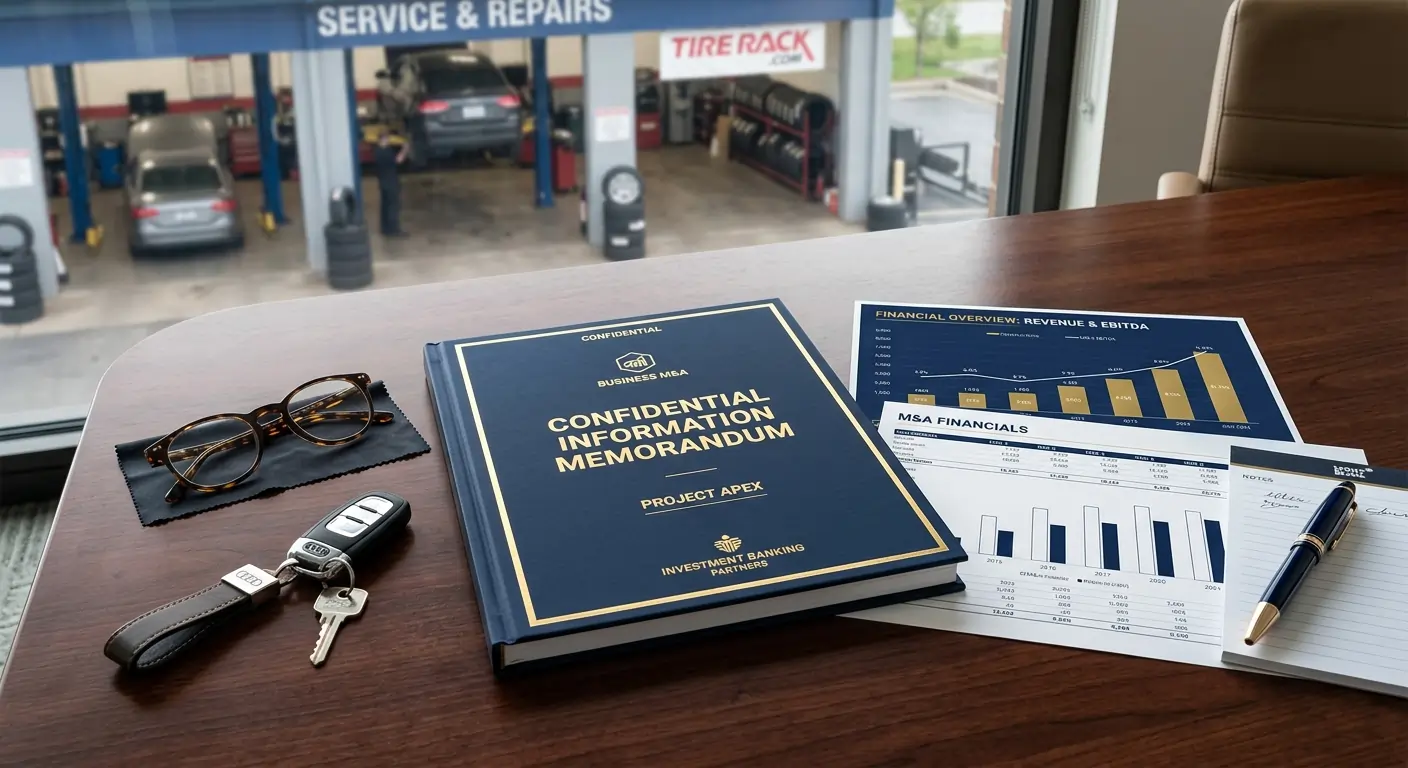
Once potential buyers review a teaser and sign the NDA, the process moves to the next major milestone: strategically revealing your business through the Confidential Information Memorandum, or CIM.
The CIM is far more than a simple brochure. It’s a comprehensive, carefully crafted document prepared by your advisor with your direct input. In essence, it becomes your story; where you were, where you are today and where you are headed. The CIM will showcase years of hard work, strategic decisions, and operational strengths into a single, compelling document. This document shapes how sophisticated buyers perceive your business, build their financial models, and ultimately determine what they’re willing to pay.
The CIM strikes a careful balance. It provides enough detail for buyers to evaluate the opportunity seriously (covering scale, profitability, and growth potential) while protecting sensitive information that remains reserved for later stages under strict control. When done well, a CIM frames your business with favorably while maintaining credibility through accurate data and shortcomings, while creating a competitive tension among interested parties.
A strong CIM typically includes several sections that work together to build a comprehensive picture. It opens with an executive summary that delivers a high-level snapshot of your operations, key value drivers and the strategic rationale for the sale. This section often forms the buyer’s first and most lasting impression.
From there, the document provides a company overview, touching on your history, ownership structure, and culture. It then details your products and services, highlighting offerings like tire sales, alignments, diagnostics, and fleet maintenance, along with the differentiators that set you apart in a competitive market.
A market overview follows, outlining industry size, tailwinds like aging vehicle fleets and rising repair complexity, headwinds such as the shift toward EVs, and the competitive landscape. This helps buyers validate long-term growth prospects.
The customer and revenue profile is especially important; it examines concentration, category mix, retention rates and so on. The intent is to accurately demonstrate revenue durability across sites and customer types.
Operations and infrastructure sections describe your facilities, equipment, vendor relationships, and technology backbone (we generally prefer to have individual facility summaries as well).
Management and employee details signal post-transaction continuity, while historical financial performance presents results, key performance indicators like bay utilization and parts margins, trends, and necessary adjustments. Financial projections, grounded in realistic assumptions, often carry the greatest influence on valuation. Finally, a curated list of investment highlights crystallizes the strongest reasons to pursue your business.
Far from a data dump, a well-constructed CIM is a strategic tool. It reduces buyer uncertainty, accelerates trust, and positions your dealership to command the highest possible multiple in a competitive process.