
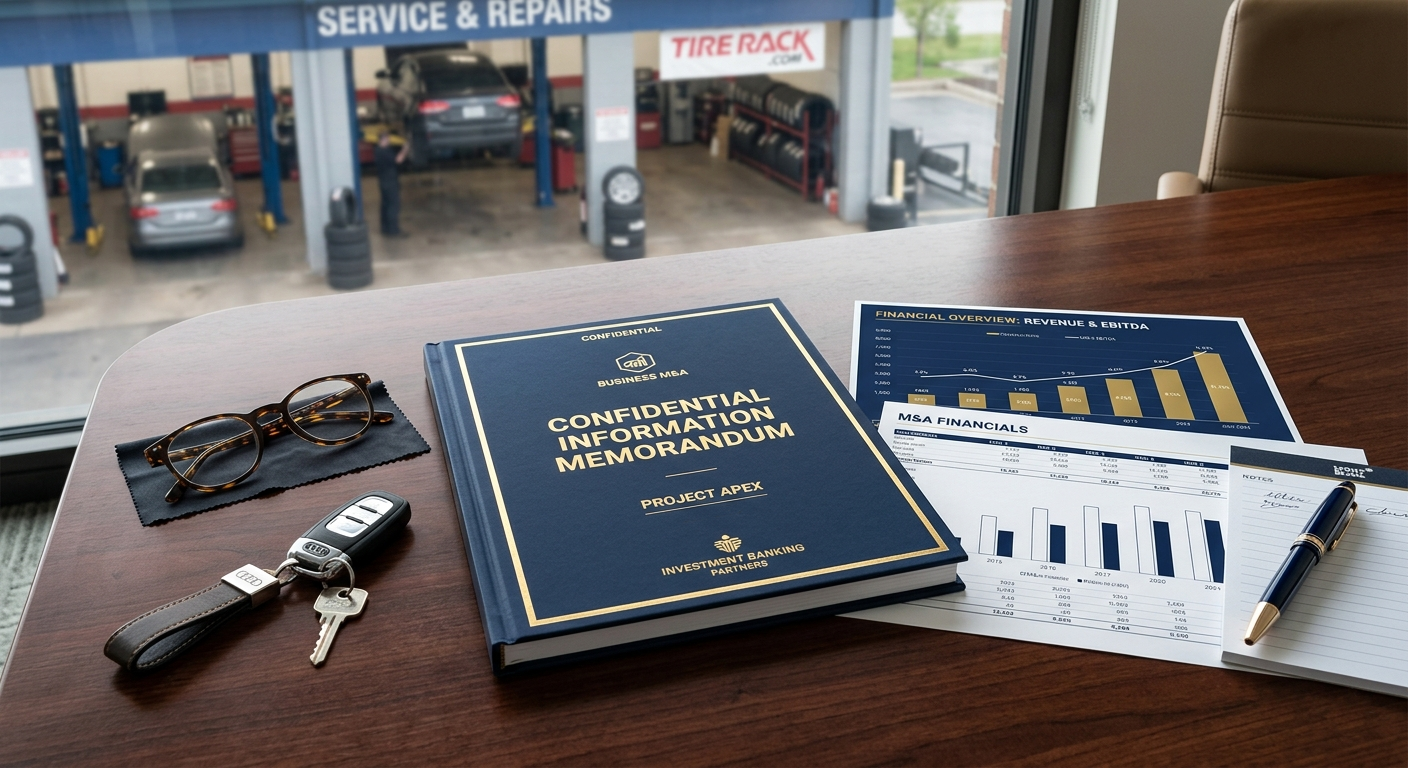
Having outlined what a CIM is and its essential components, the real leverage comes from how actively you participate in its creation. The document is only as powerful as the narrative it tells—and that narrative is strongest when it reflects your firsthand knowledge of the business.
You must own the story. While your advisor knows how to structure and package information effectively, only you can ensure the themes, strengths, and unique value drivers truly represent business; make certain the CIM highlights what sets your operations apart.
Operational strengths deserve clear articulation. Describe the systems, standard operating procedures, training programs, and leadership depth that allow your business to run smoothly across multiple sites. Emphasize how these elements support scalability without requiring outsized future investment.
Every number in the document deserves scrutiny. Buyers will build their models directly from the CIM and the corresponding financial model. Even minor inaccuracies can undermine credibility or give them ammunition to negotiate lower prices later.
Margins and adjustments require the same rigor. Pressure-test your gross margin and EBITDA story, clearly documenting add-backs and explaining any fluctuations (seasonal tire sales, supply chain impacts) with evidence tied to real operational improvements. Buyers will dissect these lines closely, so preempt their questions by showing consistency and durability. (I’ll discuss this further in my next segment on Quality of Earnings).
Finally, the growth story and projections must be anchored in credible drivers—market demand, capacity additions, pricing initiatives, new service lines, or proven pipelines—rather than optimism alone. Buyers reward well-supported forecasts and discount anything that appears inflated.
Avoid common pitfalls that can diminish the CIM’s effectiveness. Don’t leave drafting entirely to your advisor; key nuances may be overlooked, never let the document create a story that diligence will contradict and address risks transparently with context and mitigation strategies rather than ignoring them.
When you stay deeply involved, the CIM transforms from a disclosure document into a true strategic asset. It shapes perception, builds buyer confidence quickly, and protects—and often enhances—your valuation in a competitive market. For multi-location auto service owners preparing for an exit, partnering with aftermarket-savvy advisors and taking an active role in the CIM process is one of the smartest ways to make your one opportunity count.
CIMs for Multi-Location Auto Service Owners
Selling a multi-location auto repair or tire dealership is often a once-in-a-lifetime event. You get one chance to present your business in the best possible light, maximize value, and secure favorable terms. Once potential buyers review a teaser and sign an NDA, the next critical step begins: presenting your business through a Confidential Information Memorandum, or CIM.
A CIM is much more than a brochure. It is a comprehensive, carefully crafted document prepared by your advisor with your input. It tells your story—where your business started, where it stands today, and where it is headed. A strong CIM highlights years of hard work, strategic decisions, and operational strengths in a single compelling package. This document shapes how buyers view your business, build their financial models, and determine what they are willing to pay.
The CIM strikes a balance. It must provide enough detail for buyers to seriously evaluate your company—covering size, profitability, and growth potential—while protecting sensitive information until later stages. A well-constructed CIM frames your business favorably, maintains credibility with accurate data, and creates competitive tension among interested buyers.
Key Sections of a Strong CIM
A CIM typically opens with an Executive Summary, offering a clear snapshot of your operations, key value drivers, and the strategic rationale for the sale. This section often forms the buyer’s first and most lasting impression.
Next comes the Company Overview, covering your history, ownership structure, and culture. It may outline your products and services—such as tire sales, alignments, diagnostics, and fleet maintenance—while highlighting what sets your business apart in a competitive market.
A Market Overview follows, providing context on industry size, growth drivers like aging vehicle fleets and rising repair complexity, and challenges such as the shift toward electric vehicles. This section helps buyers validate long-term growth potential.
The Customer and Revenue Profile is critical. It highlights customer mix, revenue concentration, retention rates, and category breakdowns to demonstrate the durability of your income across multiple locations.
Operations and Infrastructure sections describe your facilities, equipment, vendor relationships, and technology systems. Many CIMs include individual facility summaries. Management and Employee Details show the depth of your leadership team and the continuity buyers can expect post-sale.
Financial Performance presents historical results, key metrics like bay utilization and parts margins, and any necessary adjustments. Financial Projections must be realistic and supported by credible growth drivers—such as market demand, capacity expansions, new service lines, or pricing strategies—because these forecasts heavily influence valuation.
Finally, a curated Investment Highlights section distills the strongest reasons for buyers to pursue your business.
The Owner’s Role in Building the CIM
Your advisor will structure and package the CIM, but your active involvement ensures it reflects the true strengths of your business. Highlight operational systems, training programs, and leadership depth that allow multiple locations to run smoothly and scale efficiently.
Every number in the CIM must be accurate. Buyers will rely on this data to build financial models, and even small errors can damage credibility or lead to lower offers. Document margins, adjustments, and any fluctuations—such as seasonal tire sales or supply chain impacts—with clear explanations.
The growth story must be supported by evidence, not just optimism. Buyers reward credible, well-supported projections and will discount anything that feels inflated.
Avoiding Common Pitfalls
• Don’t leave drafting entirely to your advisor—your insight ensures key strengths are captured.
• Never let the CIM suggest a story that due diligence will contradict.
• Be transparent about risks, paired with context and mitigation strategies.
Why a CIM Matters
When done well, a CIM is far more than a disclosure document. It reduces buyer uncertainty, builds trust, and positions your business to command the highest possible value in a competitive process. For multi-location auto service owners preparing for an exit, engaging experienced advisors and staying deeply involved in the CIM process is one of the smartest ways to make your single shot at selling truly count.